Sapling Design System Documentation
@Ridgeline
I joined Ridgeline as the design systems design lead, working closely with the UI Frameworks and Experience Engineering teams. In addition to owning the Sapling design system, I identified, designed, and implemented a centralized documentation platform to address systemic breakdowns in how design system knowledge was created, shared, and maintained.

Overview
Ridgeline was in its sixth year as a startup when I joined. The product was months away from going live, with a single customer and an ambitious roadmap ahead. Sapling, the design system, was the sole system used to shape the entire platform's UX/UI, supporting a core UI library and multiple micro-frontends.
While the component library itself was solid, documentation had become fragmented across six tools:
There was no clear source of truth, no documentation strategy, and no shared understanding of where decisions lived or how they evolved. As a result, teams struggled to confidently use Sapling, despite it being foundational to the product.
Defining the Problem
The problem was not a lack of documentation. It was a lack of cohesion, discoverability, and trust.
Designers, product engineers, PMs, and UI engineers had to visit multiple tools to answer basic questions:
- Does a component already exist?
- How is it meant to be used?
- Why was it designed this way?
- Has it changed recently?
This led to:
The source of truth was blurry, and decision history was effectively lost.
Research & Validation
Rather than assuming the problem, I validated it through deep qualitative and quantitative research:
Key insights emerged consistently:
- Engineers often bypassed documentation entirely because it was outdated or hard to find
- Storybook was trusted most, but lacked context, rationale, and discoverability
- Designers and engineers wanted everything in one place, without losing role-specific detail
- New hires had "nothing" to onboard from
- Teams wanted documentation to reflect how things are actually built, not idealized intent
"I don't want ten ways to do something. Show me the one we're supposed to build."
Recurring theme from interviews
Goals
The goal was not to replace existing tools, but to make the system legible.
Single Entry Point
Create a single, centralized entry point for all Sapling documentation.
Preserve Workflows
Preserve existing ownership and workflows for content creation.
Discoverable Context
Make design, code, decisions, and usage discoverable in context.
Reduce Dependency
Reduce dependency on UI engineers for basic questions. Improve onboarding speed and day-to-day efficiency.
Strategy & Principles
Approach
I intentionally chose aggregation over consolidation.
Rather than forcing teams to abandon tools they already relied on, I designed a documentation site that reflected and surfaced content from multiple sources, bringing it together into one coherent experience.
Three guiding principles shaped every decision:
Meet teams where they already work
Documentation should reflect reality, not intent
Decisions must be discoverable
This allowed us to improve clarity and trust without disrupting existing processes.
Solution: A Purpose-Built Documentation Site
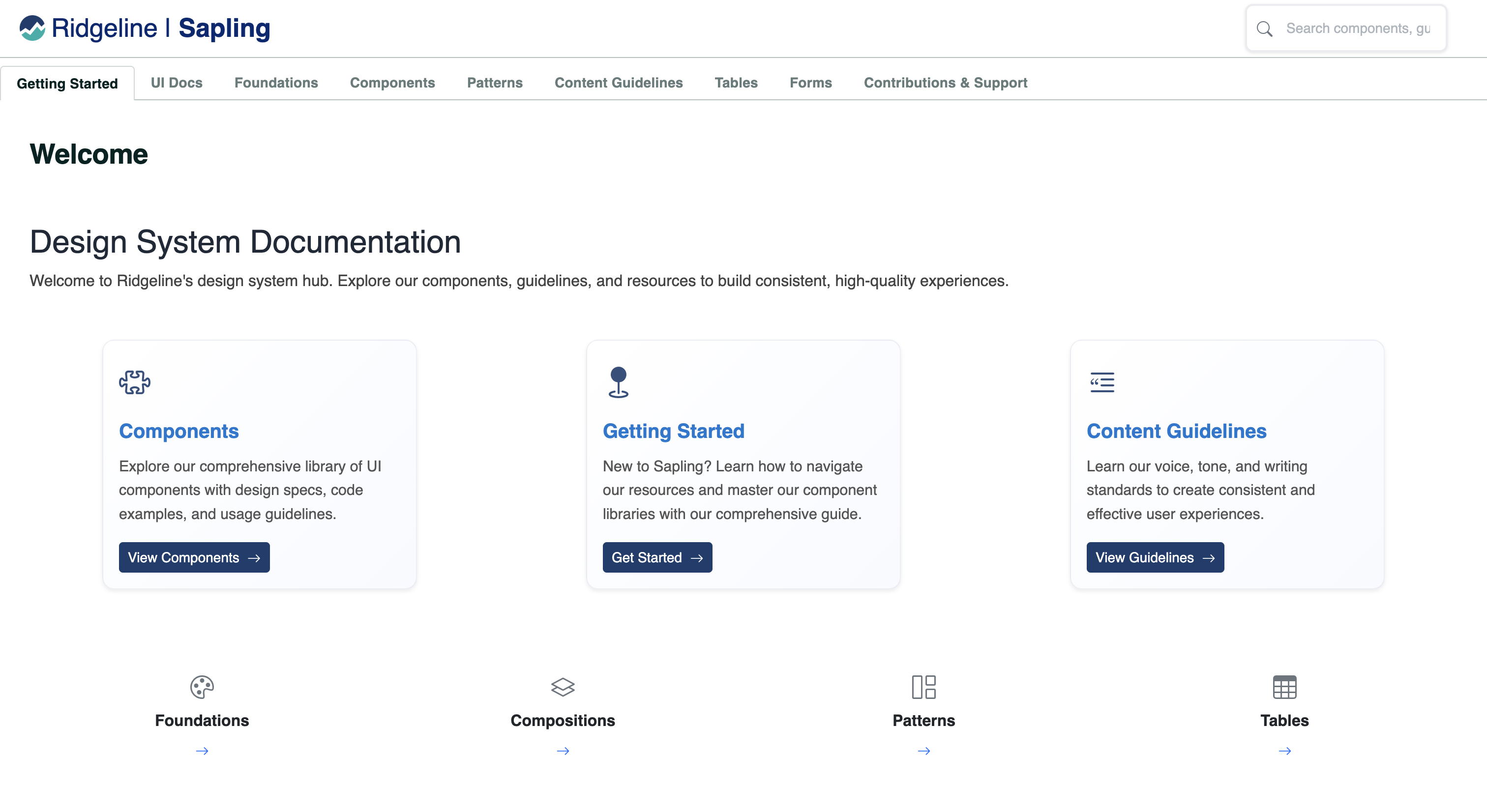
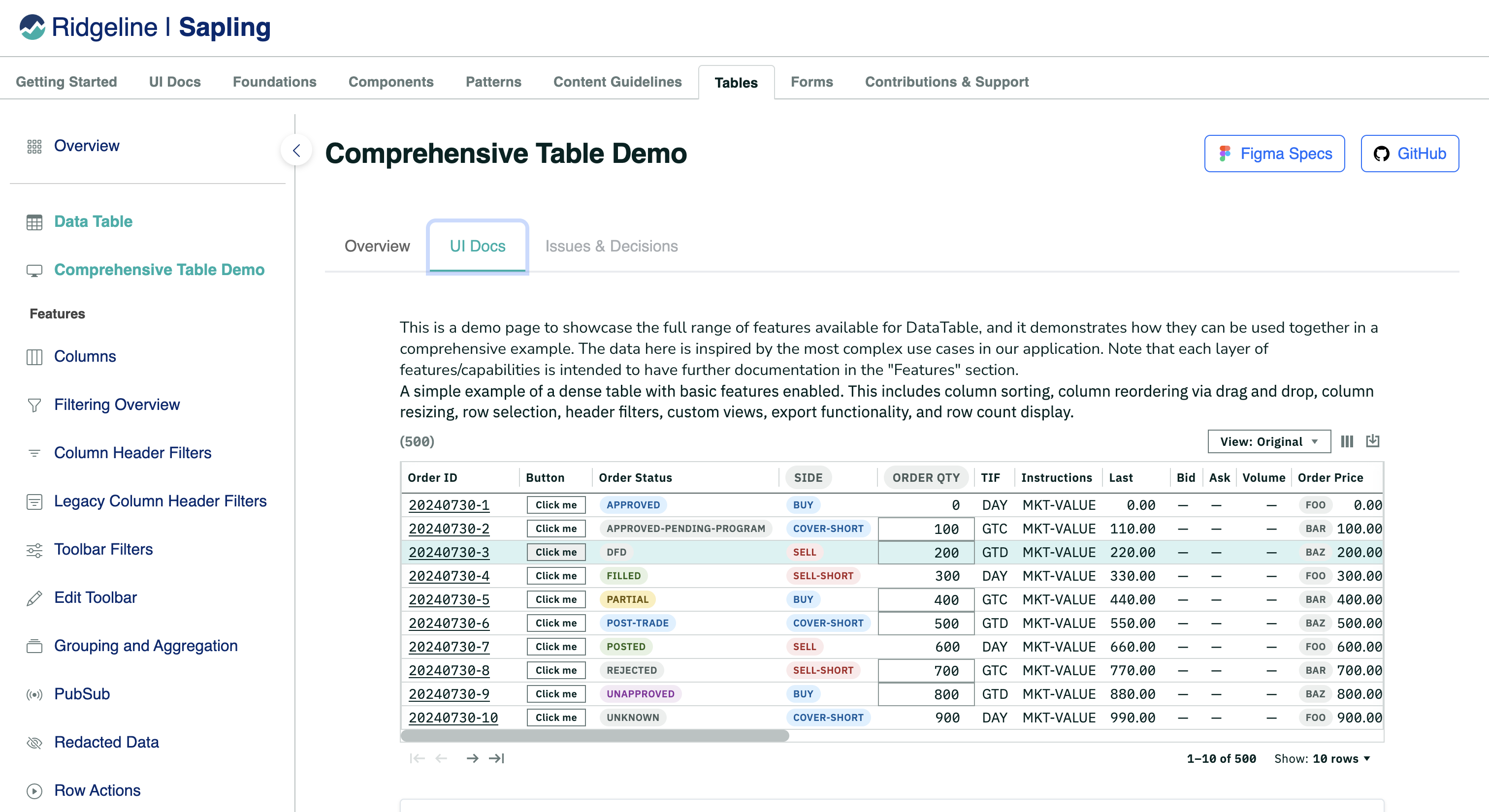
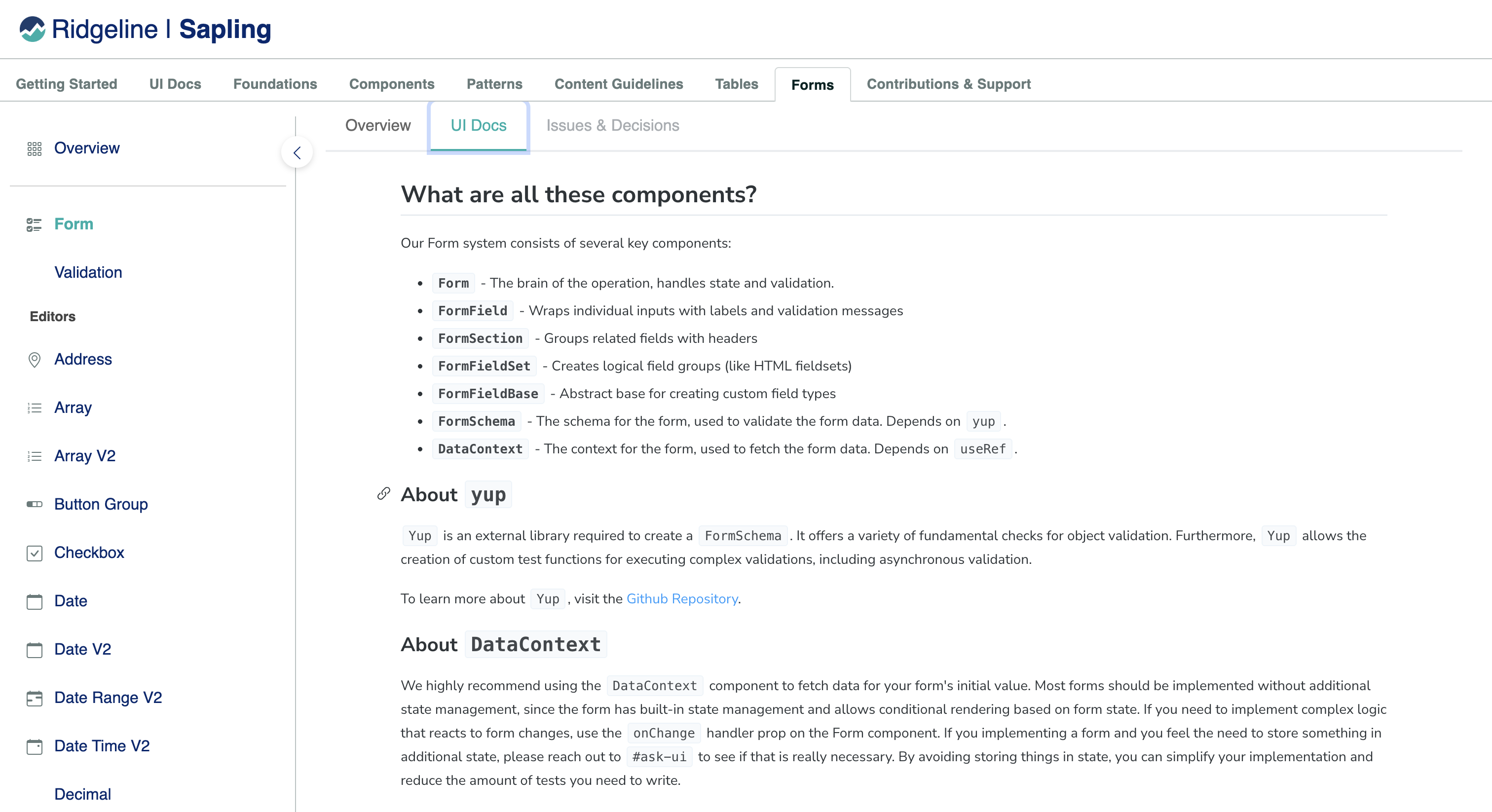
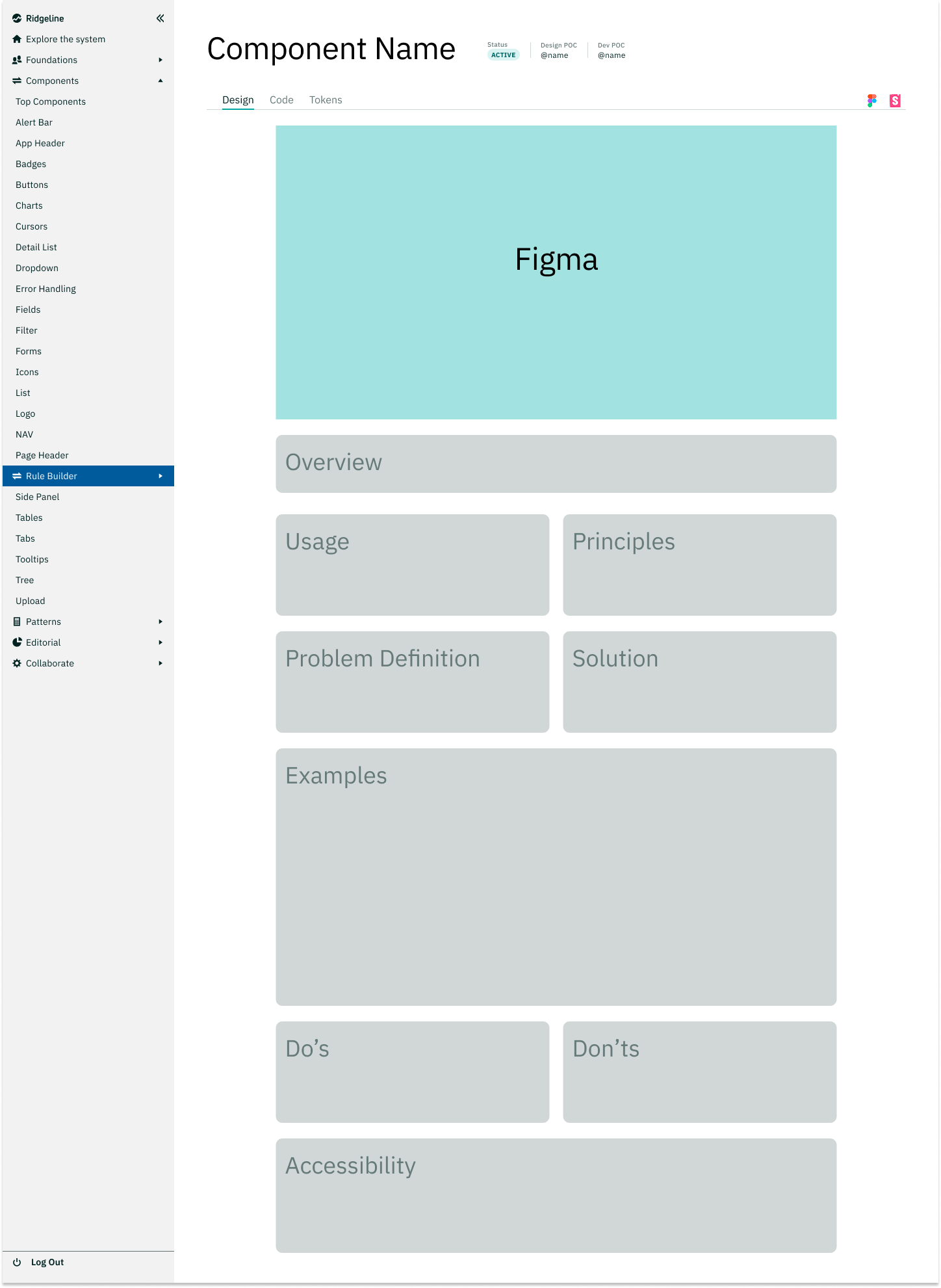
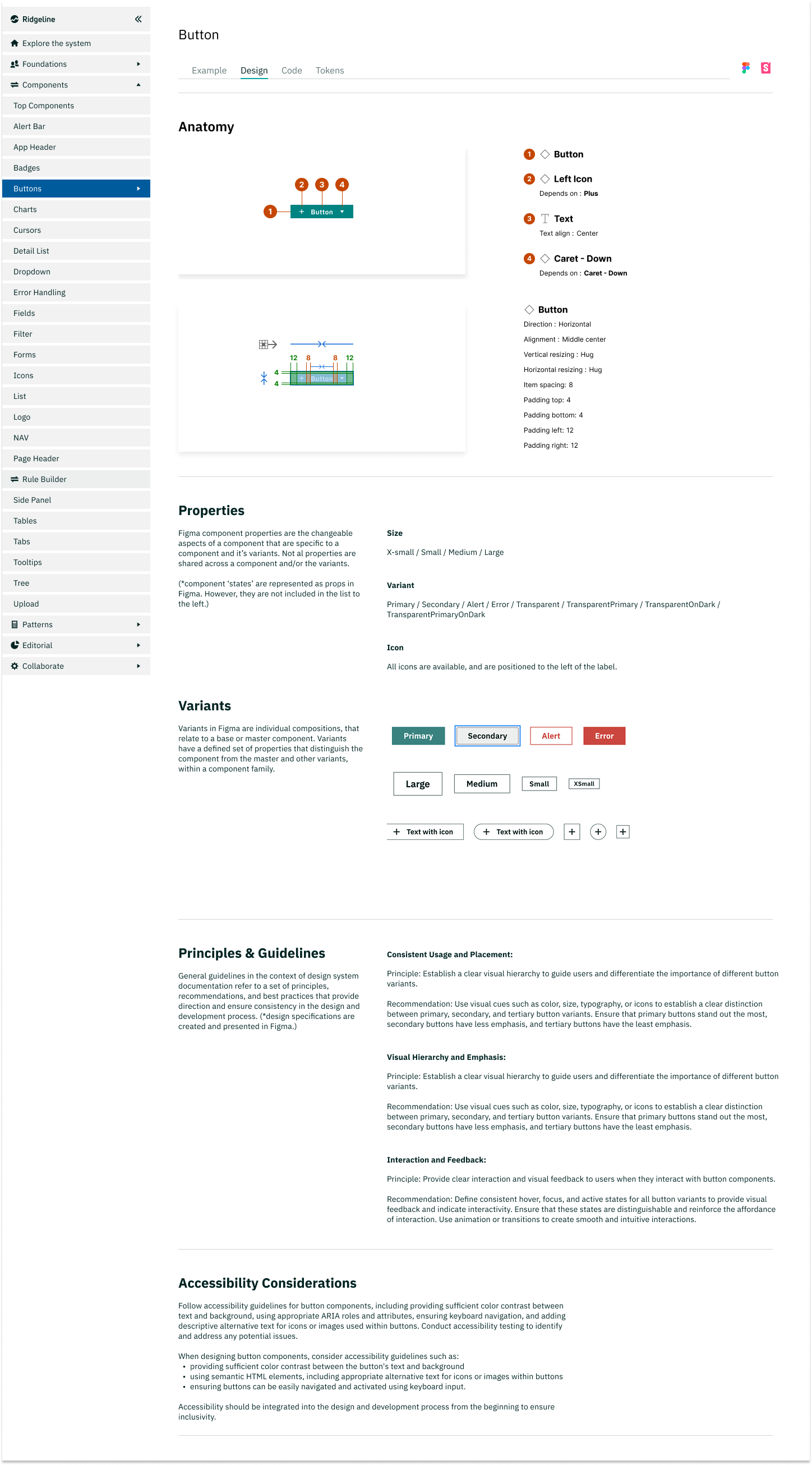
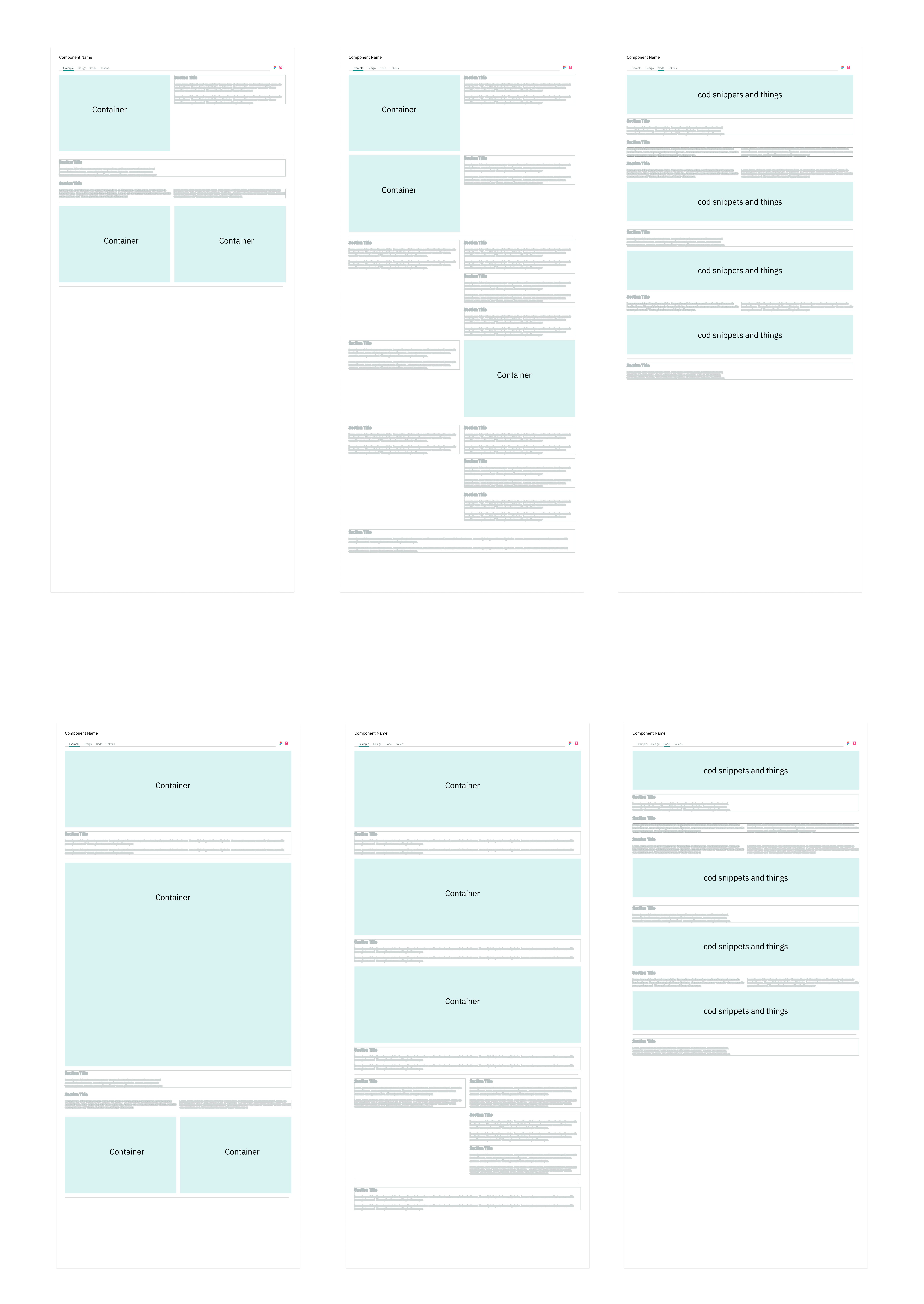
I designed and built a Documentation Site for Sapling (DSD) from the ground up.
The site:
- Acts as a centralized hub for all design system knowledge
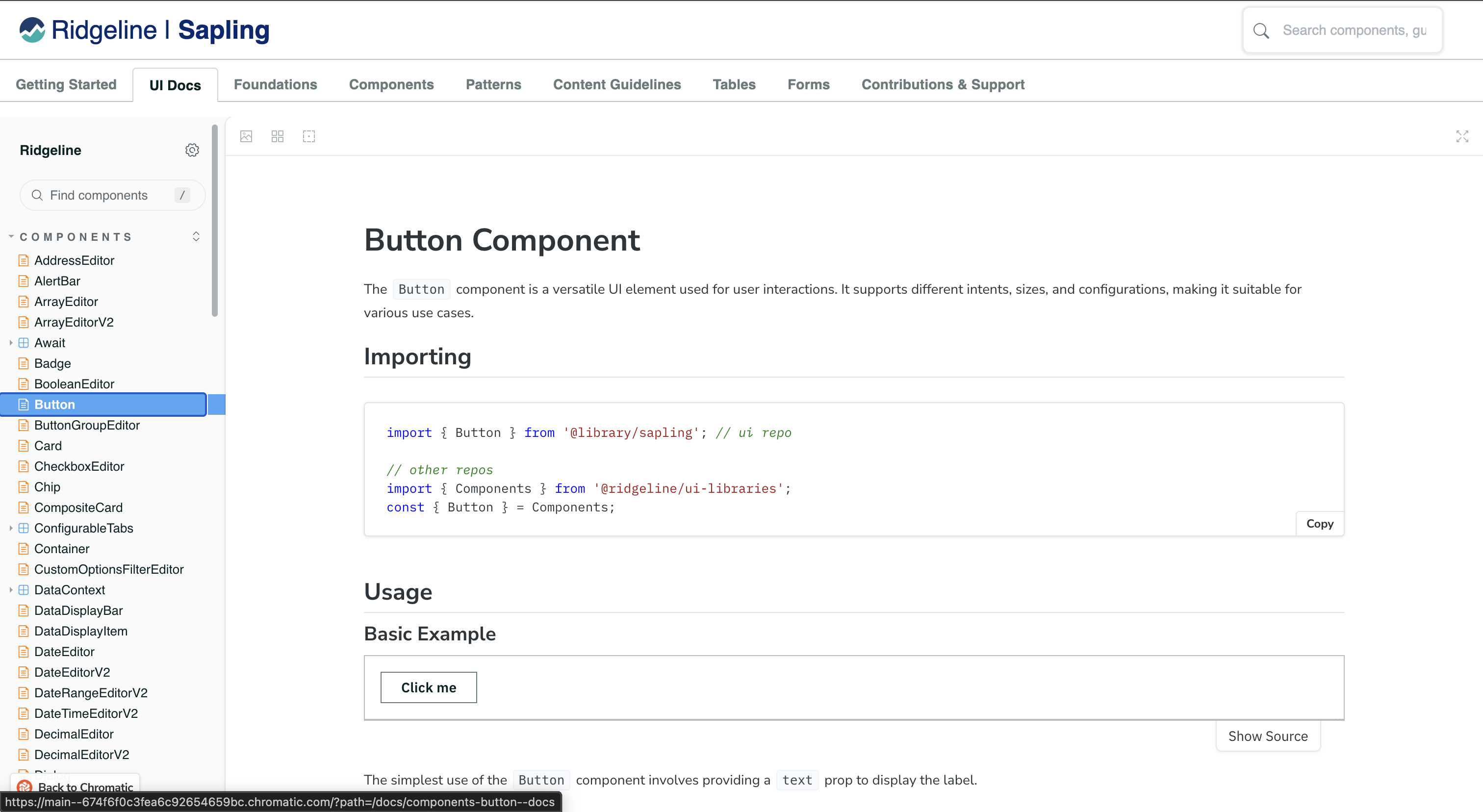
- Embeds Storybook directly into the experience
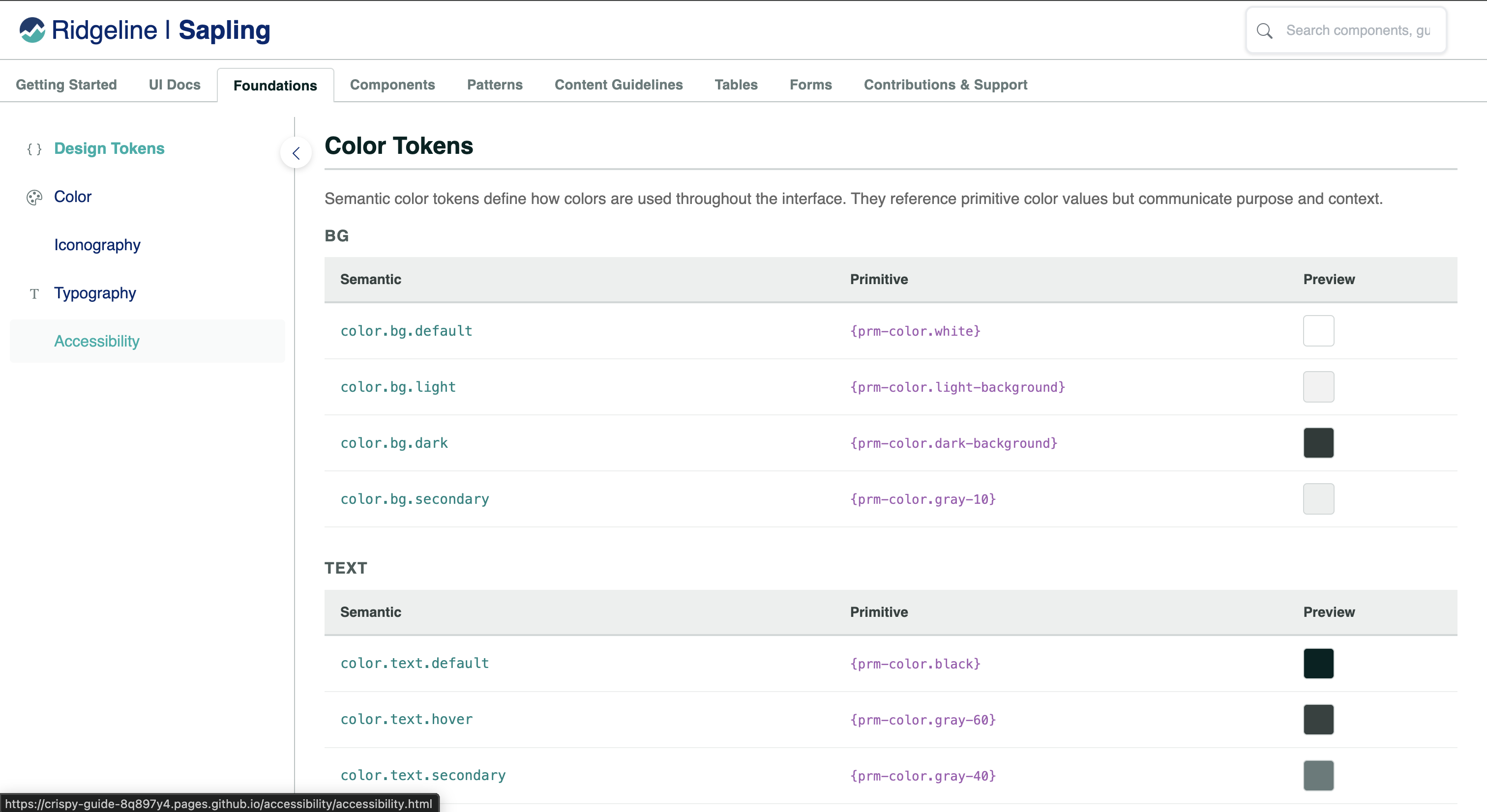
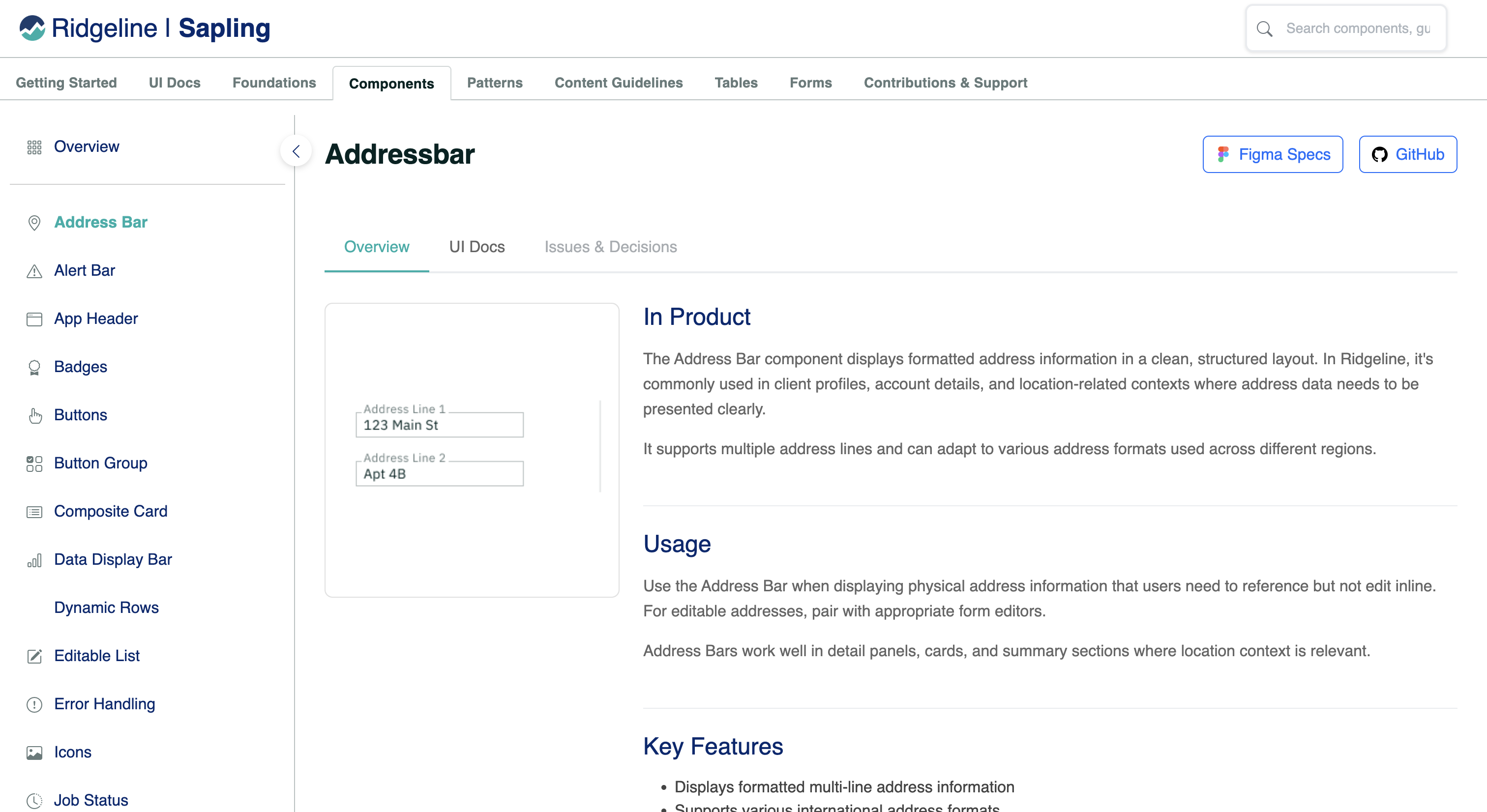
- Surfaces Figma specs, design tokens, usage guidelines, and standards
- Provides direct links back to source repositories when deeper detail is needed
Teams no longer needed to remember where something lived, only what they were looking for.
Execution
Design & Build
I bootstrapped the site myself using HTML, CSS, and JavaScript, designing the IA, interaction model, and visual structure. I continue to maintain and enhance it regularly.
Storybook Integration
Keeping Storybook in sync was one of the hardest problems. Initially, I manually tracked updates, but this didn't scale. I developed a script that consumes Storybook's JSON map, dynamically linking and iframing relevant stories per documentation page. Eventually, I enabled the entire Storybook instance to load within the site.
Key Challenge Solved
The Storybook integration removed me as a bottleneck and ensured accuracy at scale. Users always access the latest content without leaving the DSD.
Contributions & Governance
Another challenge was enabling non-technical contributions. Originally, I explored building a CMS to support federated documentation ownership. While viable, it introduced long-term maintenance complexity.
Advances in AI tooling allowed a better solution:
- Documentation changes can now originate from Jira tickets, threads, or files
- AI agents generate or update content directly in the site
- Humans review and approve changes before publishing
This approach:
Results & Impact
Immediate Outcomes
- Sapling documentation now has a single, trusted home
- Engineers spend less time searching, asking, or rebuilding
- Onboarding is significantly faster for new hires
- Documentation is now viewed as a product, not an afterthought
Qualitative Impact
"If engineers have access to components and related patterns, there's less waterfall and more collaboration. Faster to design, faster to build, faster to production."
Engineer feedback
Challenges & Tradeoffs
Technical Complexity
Maintaining sync across multiple source systems required technical problem-solving beyond traditional design work.
Deferred Features
Versioning and deprecation were intentionally deferred from the MVP, then layered in later.
Building Trust in AI Workflows
Trust in AI-assisted workflows required careful framing and guardrails. Each tradeoff was made to ensure adoption first, perfection later.
Reflection & Legacy
This project elevated Sapling's perceived maturity and reinforced a critical lesson:
Design systems don't scale without documentation that scales with them.
What I'm most proud of is not the site itself, but the shift in mindset:
Documentation is now infrastructure
Knowledge is shared, not hoarded
Decisions are visible, traceable, and reusable
This work represents how I approach design systems holistically, as products that serve organizations, not just interfaces.
Visual Artifacts